The plan for the day was to get to Tokyo to visit a sake brewery 1h from Shinjuku, and go to a washoku class to satisfy both parents (by the way Kai discontinued the class as of May 2019). But the heavens and our free will to toss that away and spontaneously digress from the plan took over.
And so when passing by Shizuoka on the wy from Nagouya to Tokyo, we alighted. I only knew of Shizuoka as a place for tea plantation and nice view of mount Fuji. So at the tourist information office in the station we got pamphlets and got recommended a trip on the Nihondaira ropeway. We were taking advantage of traveling light.


 So we went for it and took the bus for the start of the ropeway. There was so much greenery around us but as it was autumn, none of us had our hayfever. It was a bit scary to be up there hanging from a cable. But I focused on the far away landscape and the view. The ride did not last long and soon we arrived at destination, the top of Mount Kuno.
And oh what a surprise! A colourful gate at the end of a flight of stairs, and a stone gate and another colourful temple awaited our visit, while banners with the 3 chestnuts crest waved gently in the wind. There was hardly anyone in the cabin or on site. And it felt very solemn yet magical to be there.


 And to my greatest pleasure, there were those roofs with wooden joinery that always made me exclaim at the ingenuity of the wood artisans and architects.
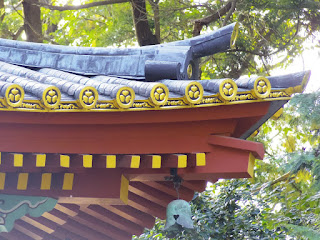
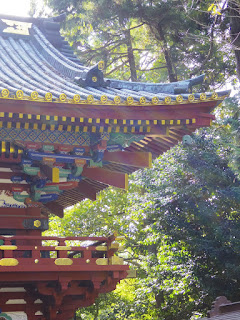


 So far the temples I have visited in Japan had very little decoration and were elegant and majestic in their simplicity, highlighting the lines and wood beams and grandeur. This temple was different and is more similar to those found in in South Korea. I chanced upon an old man who seemed to be the retainer there, so I asked him about it. Luckily I understood bits and pieces and learned this was where the shogun Tokugawa Ieyasu (1543-1616) was enshrined. He was the shogun known for unifying Japan by starting the shogunate.

So this is the Kunozan Toshogu shrine (久能山東照宮) apparently. Also enshrined here are also 2great military commanders, Toyotomi Hideyoshi and Oda Nobunaga, who I know from watching NHK Taiga dramas Gō: Hime-tachi no Sengoku (江〜姫たちの戦国〜)(thank you streaming sites and I love Ueno Juri上野 樹里 ).
As for the architecture of the site, no wonder it was used as model for other shrines. It displays fine craftmanship. Actually the style of the shrine was more buddhist than shinto.
From browsing the shrine site, there were a lot we did not see, such as the view of the ocean and maybe a view on Mount Fuji.
 But nonetheless it was a beautiful sight and made ma happy to be near 400 year old lives that led a country to peace (a thought to all those lives lost). I can imagine how the ground is dear to the locals. It is made of their seat and blood literally. It reminded me how my christian upbringing mentioned not to bow to anyone but God, but the people here made these great figures as God, not because they were human but for what they have achieved and what their desire and aim where: peace, victory, perseverance.
 The traits are deified and then humanized again in the form of stories that are transmitted over generations, and for which I am grateful as they spark the imaginations of talented story makers who come up with other stories in books, mangas (such as Noragami) and series.

And so when passing by Shizuoka on the wy from Nagouya to Tokyo, we alighted. I only knew of Shizuoka as a place for tea plantation and nice view of mount Fuji. So at the tourist information office in the station we got pamphlets and got recommended a trip on the Nihondaira ropeway. We were taking advantage of traveling light.


And oh what a surprise! A colourful gate at the end of a flight of stairs, and a stone gate and another colourful temple awaited our visit, while banners with the 3 chestnuts crest waved gently in the wind. There was hardly anyone in the cabin or on site. And it felt very solemn yet magical to be there.


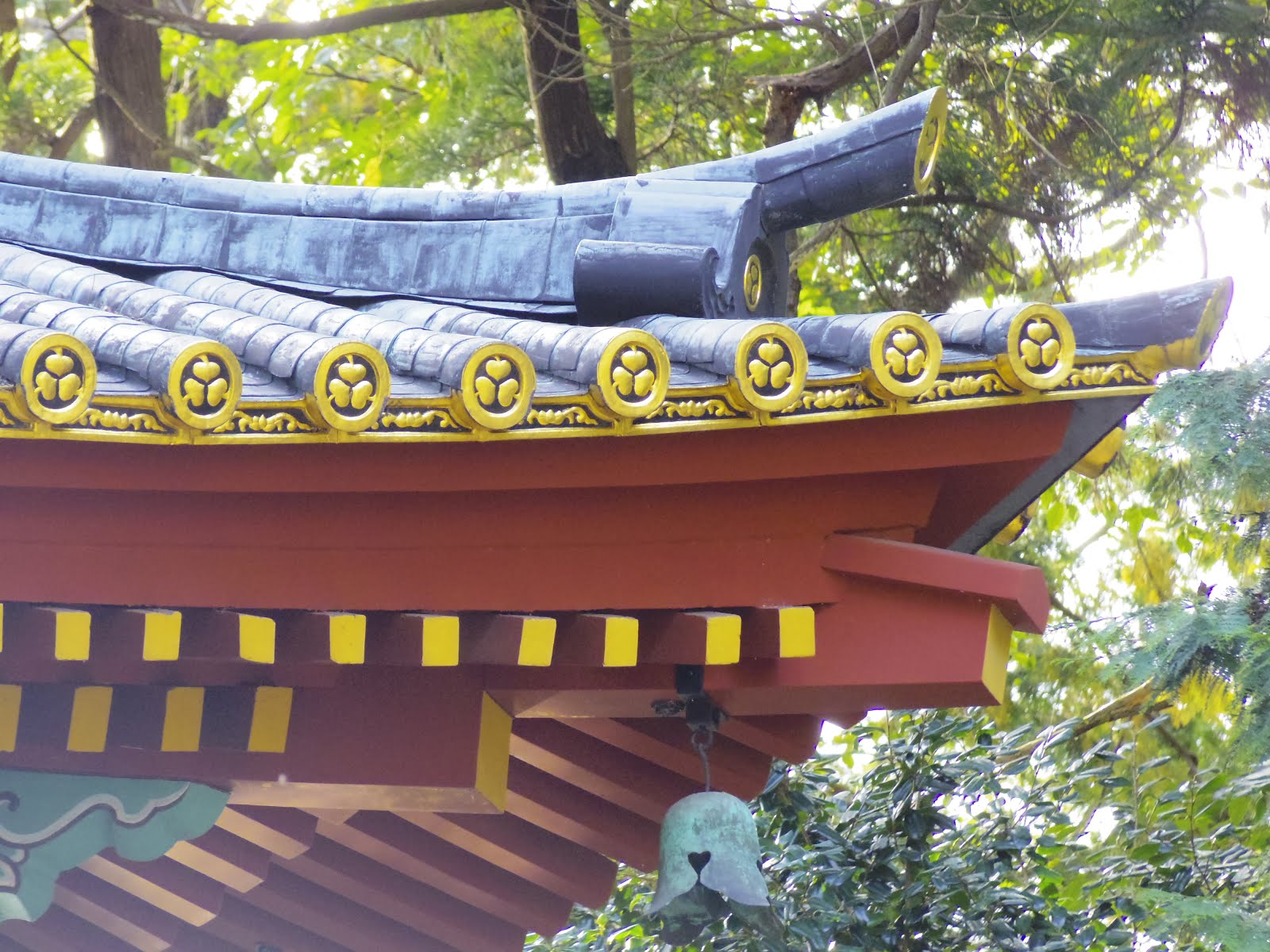


So this is the Kunozan Toshogu shrine (久能山東照宮) apparently. Also enshrined here are also 2great military commanders, Toyotomi Hideyoshi and Oda Nobunaga, who I know from watching NHK Taiga dramas Gō: Hime-tachi no Sengoku (江〜姫たちの戦国〜)(thank you streaming sites and I love Ueno Juri上野 樹里 ).
As for the architecture of the site, no wonder it was used as model for other shrines. It displays fine craftmanship. Actually the style of the shrine was more buddhist than shinto.
From browsing the shrine site, there were a lot we did not see, such as the view of the ocean and maybe a view on Mount Fuji.


